Charlotte region · NC + York & Lancaster, SC
Land clearing and grading for Charlotte-area lots and acreage
Charlotte Landworks connects property owners in Charlotte and surrounding towns with independent local operators for land and lot clearing, forestry mulching, grading and site prep, plus gravel driveways. Tell us the acreage, how thick the woods are and how a truck gets in, and a local crew follows up.
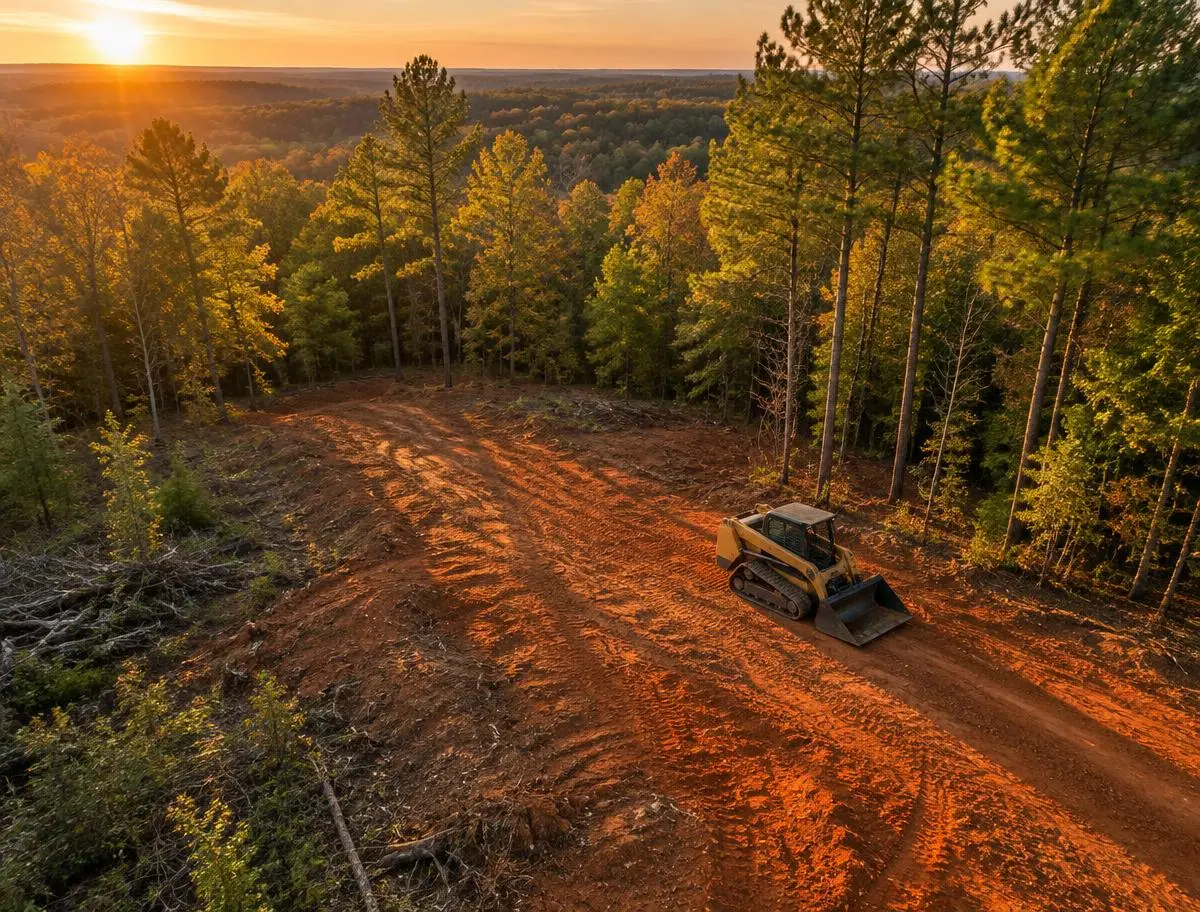
Published ranges
Clearing cost by lot size
| Lot size | Typical range |
|---|---|
| 1/8 acre | $600–$2,000 |
| 1/4 acre | $800–$3,000 |
| 1/2 acre | $1,000–$5,000 |
| 1 acre | $1,200–$8,000 |
| 2 acres | $1,900–$15,000 |
| 5 acres | $4,500–$35,000 |
A cleared quarter-acre in a Matthews subdivision and five wooded acres off a gravel road in Union County sit at opposite ends of these ranges. Tree size, stumps, slope and how far the debris has to travel move the number more than the acreage does.
These are published national ranges, not quotes. Your actual price could be higher or lower. The independent local operator who walks the property sets the final price.
Source: HomeGuide, Land Clearing Cost (updated Nov 20, 2025).
More cost detailThree ways to clear
Most properties use one of these, or a mix: mulch the edges, fully clear the build area, keep the best trees.
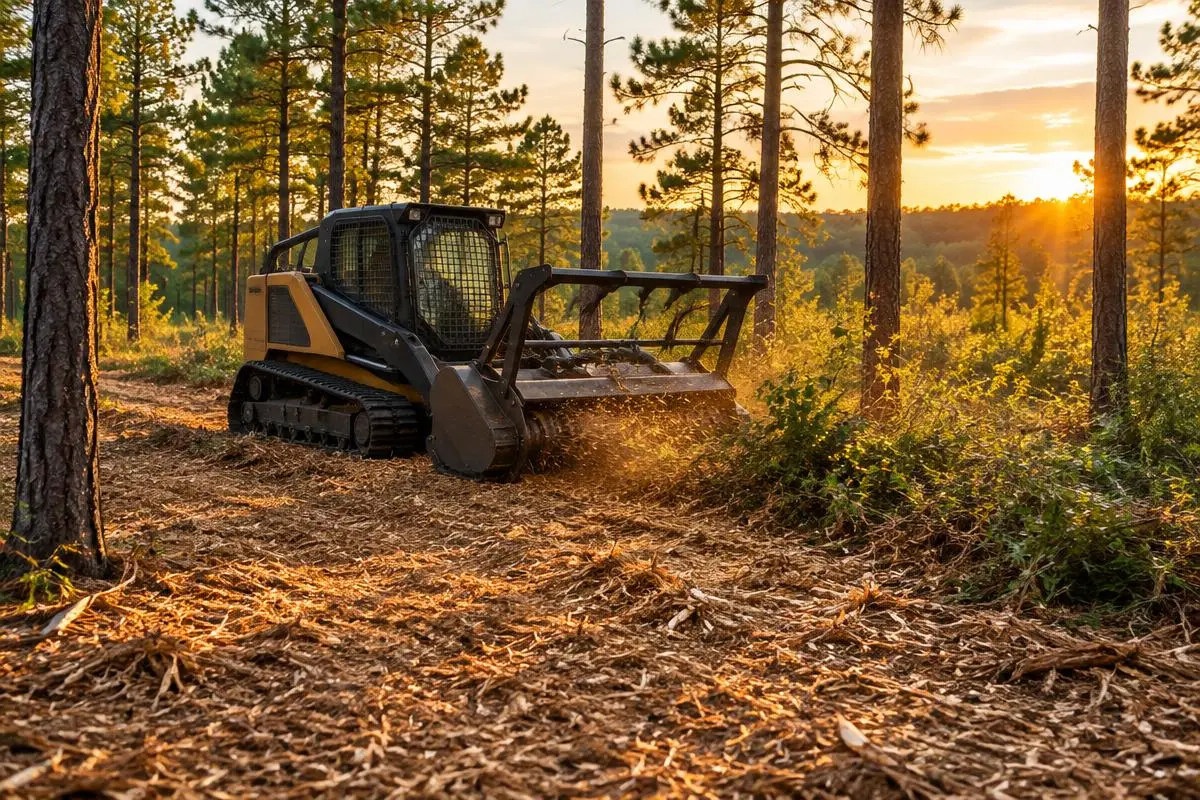
Forestry mulching
A mulching head grinds trees and brush where they stand and leaves a mulch layer on the ground. HomeGuide lists $125–$300 per hour or $1,000–$2,500 per day as published national rates.
Pros
- No burn piles and no trucking
- Mulch holds clay against erosion
- Easy to work around trees you keep
Cons
- Stumps stay at ground level
- Not a base for a pad or driveway
- Large hardwoods slow it down
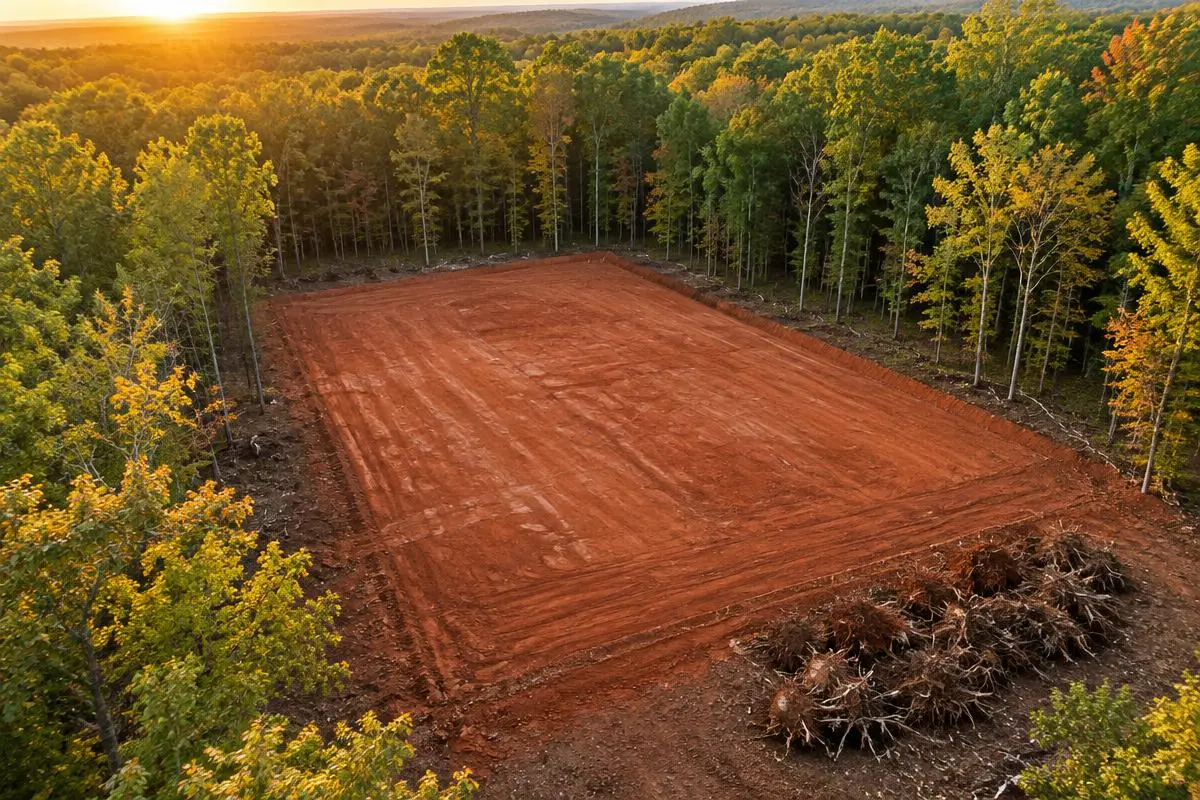
Full clearing + stumps
Trees cut or pushed, stumps and root mats pulled, debris hauled away. This is the method for building pads, driveways, septic fields and anything that has to be graded and compacted.
Pros
- Clean subgrade ready to grade
- Nothing left to rot and settle
- Works on any tree size
Cons
- Most machine days and trucking
- Leaves bare clay to stabilize
- Permit thresholds come sooner
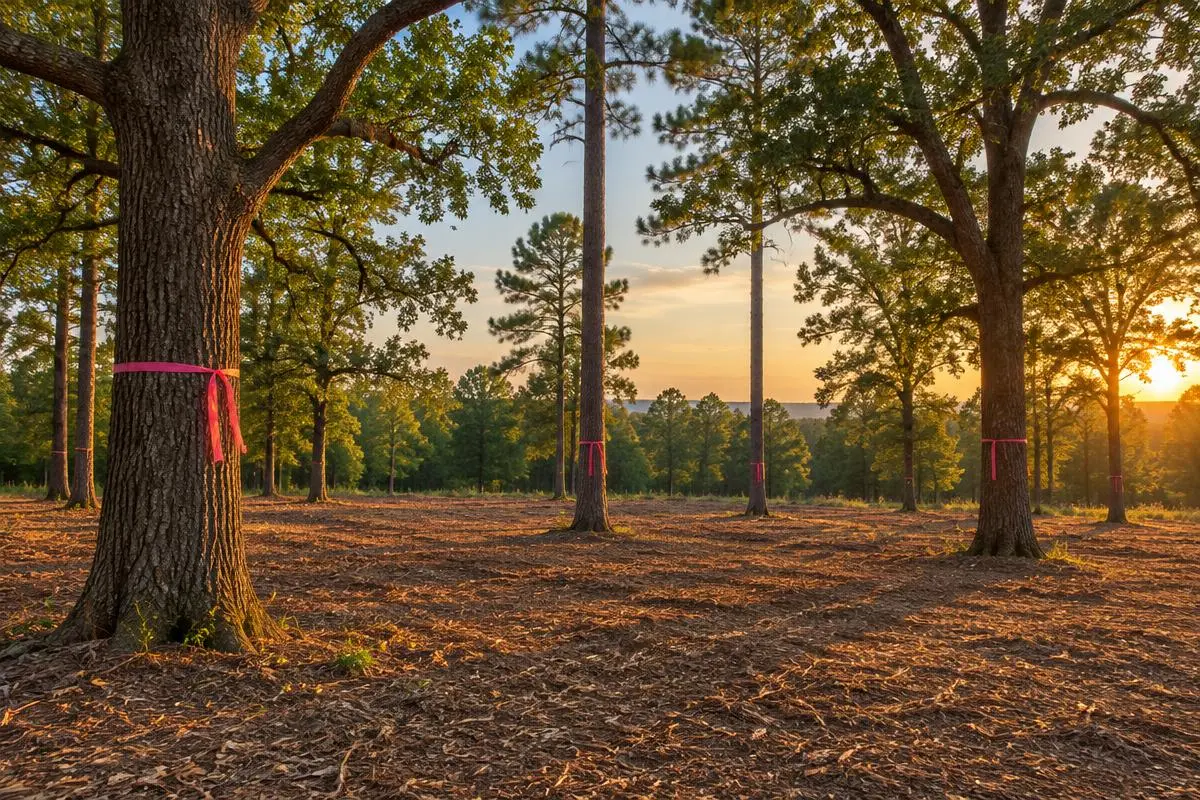
Selective clearing
Brush, vines and poor trees come out; the good oaks, pines and dogwoods you flag stay. Often done with a mulcher plus hand saws near the keepers.
Pros
- Keeps shade and value of mature trees
- Opens views and walkable woods
- Less bare ground
Cons
- Slower around every saved trunk
- Roots of keepers need protecting
- Not suited to a build footprint
1 ac
The one-acre rule
In Mecklenburg County, disturbing one acre or more generally requires an approved erosion and sediment control plan and a grading permit before work starts. Clearing, grubbing and grading all count toward that acre. Cabarrus, Union, Gaston and Iredell counties and the South Carolina side run their own programs with their own thresholds, so the operator should confirm what applies to your parcel.
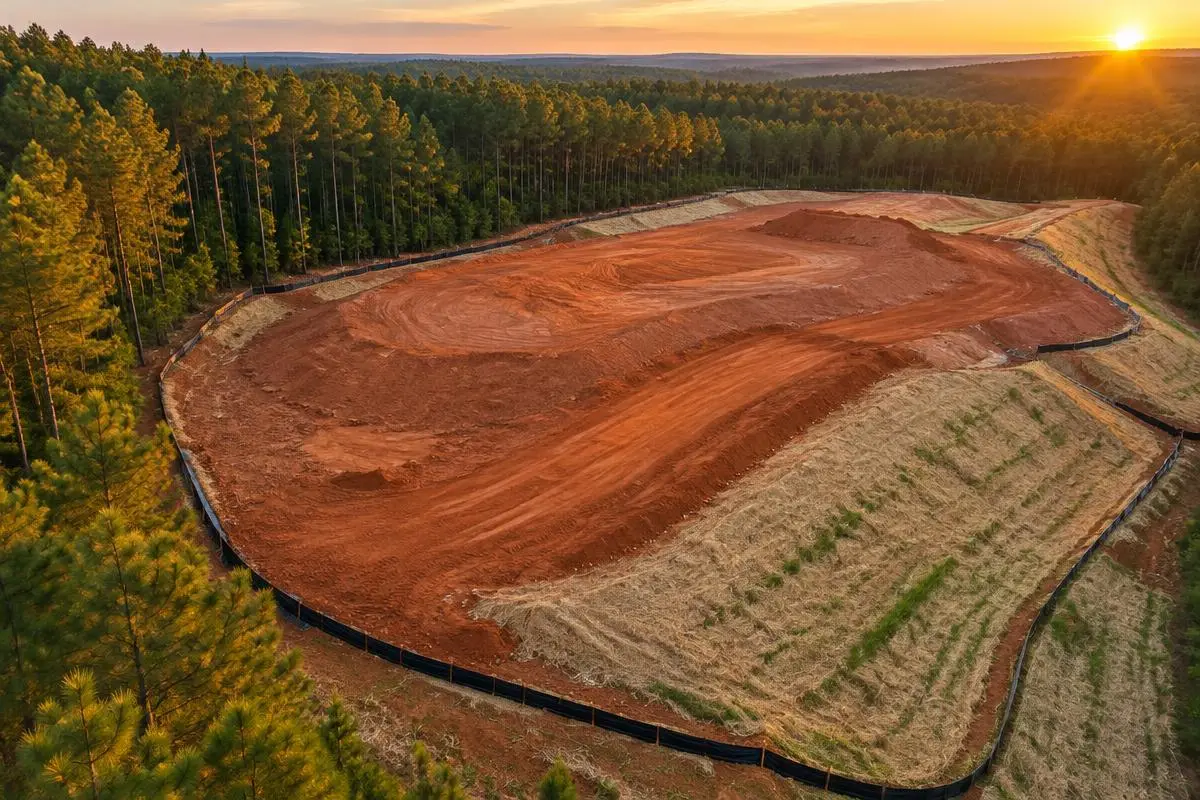
Under an acre isn't a free pass. Silt fence on the downhill side and seed and straw on bare clay are often needed on smaller jobs too, and towns can add their own rules.
Sources: Mecklenburg County Storm Water Services, Land Development; NC DEQ, Erosion and Sediment FAQs.
What local operators handle
- Lots · AcreageLand & lot clearingTrees, brush and stumps out; ground ready for a pad, shop or pasture.
- Brush · UnderstoryForestry mulchingGrinds brush and small trees in place; no burn piles, no trucks.
- Edges · Fence rowsBrush & fence-line clearingOvergrown edges, briars and old fence rows opened back up.
- Yards · PadsGrading & levelingSlope set away from the house; flat ground where you need it.
- New buildsSite preparationLot cleared, pad built, entrance in, ready for footings.
- Dig · TrenchExcavationFootings, trenches and foundations dug and hauled.
- Swales · Silt fenceDrainage & erosion controlWater routed away; clay kept on the property.
- DrivewaysGravel driveways & driveway gradingNew gravel drives built; rutted ones regraded with a crown.
- StumpsStump grinding & removalGround below grade or pulled out, root ball and all.
- Tear-downDemolition & debris removalOld sheds, barns, slabs and storm debris gone.
- PondsPond clearingBanks opened up, muck dug out, spillway checked.
How a clearing job usually runs
- 1
Walk the land
Boundaries, flagged keeper trees, wet spots, access route.
- 2
Locates and permits
NC 811 utility marks; erosion-control plan and grading permit if the disturbance calls for one.
- 3
Clearing or mulching
Machines take down and grind or stack the trees and brush.
- 4
Stump work
Ground below grade, pulled out, or left at grade, depending on the use.
- 5
Rough grade and drainage
Ground shaped so water sheds; swales or culverts where needed.
- 6
Stabilize and haul
Seed and straw on bare clay, silt fence kept up, debris hauled off.
Land questions we hear most
Should the debris be burned, hauled off or mulched?
Open burning of land-clearing debris is tightly restricted inside Mecklenburg County and regulated by state air-quality rules elsewhere, so most jobs near Charlotte come down to two choices. Mulching grinds trees and brush in place and leaves a mulch layer behind, which saves trucking. Hauling takes everything off site, which is what you want under a house pad or driveway. Many lots end up with a mix: mulch the edges, haul the build area.
Can I keep certain trees?
Yes. Walk the property with the operator and tie flagging ribbon around every tree you want to keep before any machine moves. A good crew also stays off the ground under a keeper's canopy, because tracks compact the roots. Forestry mulching is the easiest method to work around saved trees.
How long does it take to clear an acre?
It depends on how wooded it is. A light acre of brush and small pines can be a single machine day for a forestry mulcher. A heavily wooded acre with large hardwoods, stumps pulled and debris hauled off can run several days plus trucking. The operator can give you a realistic count after walking the land.
Do I need a permit to clear land?
Often, once the job gets big. In Mecklenburg County, disturbing one acre or more generally requires an approved erosion and sediment control plan and a grading permit before work starts. Other counties and the South Carolina side run their own programs. Smaller jobs can still need silt fence and stabilization, so ask the operator to confirm what applies to your parcel.
What happens to red clay after a heavy rain?
Piedmont clay turns slick and soft when it's saturated. Tracked machines rut it, it sticks to everything, and loose clay washes toward ditches and creeks. Most operators pause grading until the ground firms up, keep silt fence in place, and seed and straw bare areas as soon as the final grade is set.
Will forestry mulching kill the stumps?
Mulching grinds stumps down to about ground level, but the roots stay in the soil. Some hardwoods, such as sweetgum, can sprout back from the root system for a season or two. That's fine for pasture, trails and wooded yards. If you're building, paving or laying a driveway on that spot, plan on stump grinding below grade or full removal instead.
Request a quote
Tell us about the land
Rough acreage, how wooded it is, and how a truck gets in: that's what an operator needs to price clearing or grading. No cost to ask. Rather talk? Call (980) 690-5805